If on-page SEO is everything you control directly on your website, Off-page SEO is everything that builds your site’s reputation away from it. It covers backlinks, brand mentions, reviews, social signals, and the broader trust that other websites and people place in your brand. The logic behind it is simple: search engines can’t take a website’s word for how good it is, so they look at what the rest of the internet says about it. A site that other trustworthy, relevant sites link to and talk about is treated as more credible than one that exists in isolation — and that’s true even for a brand-new WordPress blog with excellent content.
This is often the part of SEO beginners avoid, mostly because it feels less within their control than writing a blog post or fixing a title tag. But off-page SEO doesn’t have to mean cold outreach emails or link-buying schemes. Much of it comes down to consistently creating content and a presence worth referencing, then putting in the effort to make sure the right people notice it. This guide covers the core off-page strategies worth focusing on as a beginner, in a realistic order of priority.
What you’ll learn:
- Step 1: Earn quality backlinks
- Step 2: Guest post and reach out
- Step 3: Build brand mentions
- Step 4: Engage the community
- Step 5: Audit and monitor your links
- Common beginner mistakes
- FAQs
- Conclusion
Step 1: Earn Quality Backlinks
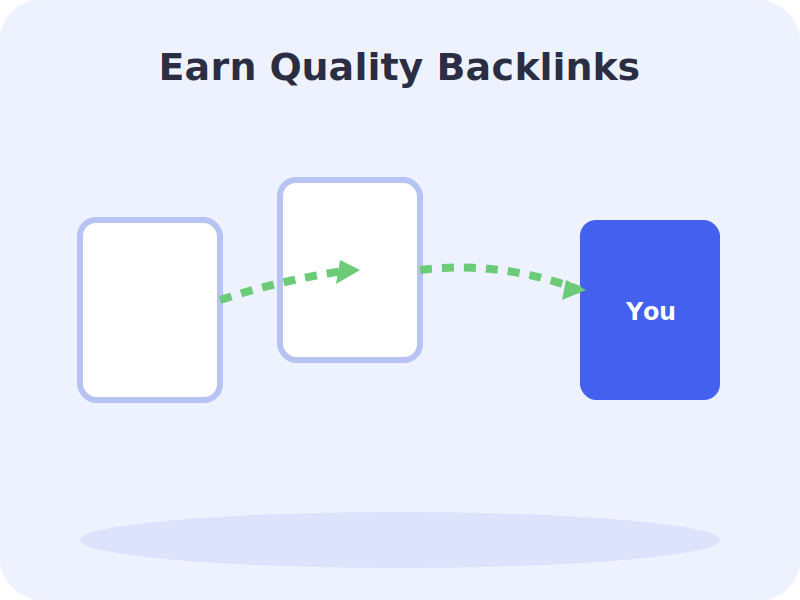
A backlink is a link from another website pointing to yours, and it remains the most well-known off-page ranking signal. Backlinks work like votes of confidence — when a relevant, trustworthy site links to your page, it tells search engines your content is worth citing. Not all backlinks are equal, though:
| Good backlinks | Bad backlinks |
| From relevant, trustworthy sites in your niche | From unrelated directories or link farms |
| Placed naturally within useful, related content | Stuffed into pages with dozens of unrelated outbound links |
| Earned through genuinely valuable content | Purchased specifically to pass ranking credit |
A handful of strong backlinks from authoritative, relevant sites consistently outperforms hundreds of weak or spammy ones. The goal isn’t to collect as many links as possible — it’s to become a source other sites genuinely want to reference.
The gap between top-ranking pages and everyone else tends to be significant — studies referenced across multiple SEO guides suggest the top-ranking result for a given search often has several times more backlinks than pages ranked just below it. That gap can feel discouraging for a new site, but it also means there’s real room to compete: most pages on the web have very few backlinks at all, so even a modest, consistent effort at earning a handful of genuinely good ones can meaningfully move the needle.
Step 2: Guest Post and Reach Out
Especially early on, most backlinks won’t arrive on their own — you’ll need to go find them. A few reliable, sustainable approaches:
- Guest posting — write for relevant blogs in your niche, with a natural link back to your own site included where it genuinely fits
- Broken link building — find outdated or broken links on high-traffic pages and offer your content as a working replacement
- Co-created content — team up with other brands or creators in your niche on an ebook, webinar, or joint resource, which often results in multiple backlinks at once
- Direct outreach — if a site has already mentioned your topic (or a competitor) without linking, a polite note suggesting your resource can turn that mention into a link
None of this needs to feel like spam. The strongest outreach starts from something genuinely useful — a specific data point, an original guide, a well-designed resource — that gives the other site a real reason to want to link to you.
Step 3: Build Brand Mentions
Off-page SEO isn’t only about clickable links. A mention of your business or brand name on a trusted site — even without a link — still signals relevance and trust to search engines, and it’s increasingly relevant to how often AI systems cite a brand when generating answers. A few ways to build mentions:
- Digital PR — pitching a story, survey, or original data to journalists and industry publications
- Original research or statistics — content like “Industry X Statistics 2026” tends to get referenced and cited by other sites naturally
- Press releases for genuinely newsworthy announcements, not routine updates
- Podcast and interview appearances, which often come with a mention and sometimes a link
Step 4: Engage the Community
Social shares and community engagement don’t move rankings directly, but they increase visibility — and that visibility often leads to more links and mentions over time. A few low-effort, sustainable habits:
- Share new content across your social channels consistently, not just occasionally
- Participate genuinely in forums and niche communities related to your topic, rather than dropping links without context
- Respond to comments and engage where your content is already being discussed
- Encourage satisfied customers to leave reviews, which build trust signals independent of formal backlinks
None of this replaces backlinks, but it builds the kind of ambient visibility that tends to produce backlinks and mentions as a natural byproduct.
It’s worth thinking of community engagement as a long game rather than a promotional channel. Showing up consistently and helpfully in a niche community — answering questions, sharing genuinely useful resources, contributing without always attaching a link — builds the kind of reputation that eventually makes people want to link to or recommend you on their own, without being asked.
Step 5: Audit and Monitor Your Links
Off-page SEO isn’t something you set up once and forget. Regularly reviewing your backlink profile helps you understand what’s working and catch problems early:
- Backlink audits — see which sites link to you, and evaluate whether those links are helping or hurting your credibility
- Competitor gap analysis — identify sites linking to competitors but not to you, which often reveal realistic outreach opportunities
- Link reclamation — find existing mentions of your brand that aren’t linked yet, and politely ask for the link to be added
- Disavowing spammy links — if low-quality sites link to you unexpectedly, tools exist to tell search engines to disregard them
Watch: Full Video Walkthroughs
Common Beginner Mistakes to Avoid
- Chasing quantity over quality. A few links from trusted, relevant sites beat a large number of weak or irrelevant ones.
- Buying links. Purchased links violate most search engines’ guidelines and can lead to penalties rather than ranking improvements.
- Ignoring your own site’s readiness. Sending outreach traffic to a page that isn’t fully optimized on-page wastes the authority those links could have passed on.
- Using exact-match anchor text everywhere. Natural, varied anchor text looks organic; the same commercial phrase repeated across every link looks manipulative.
- Treating off-page SEO as only link building. Mentions, reviews, and community presence all contribute to the same trust signals search engines evaluate.
Frequently Asked Questions
Q: How many backlinks do I need to rank well?
A: There’s no fixed number — quality and relevance matter far more than raw count. A handful of strong, relevant links can outperform hundreds of weak ones.
Q: Is off-page SEO more important than on-page SEO?
A: Neither works well without the other. On-page SEO makes your content ready to rank; off-page SEO builds the authority needed to actually rank it. Both matter together.
Q: How long does off-page SEO take to show results?
A: It’s a slow-building process — often months rather than weeks — since earning genuine trust and authority takes time and can’t be rushed without risking a penalty.
Q: Are brand mentions without a link still valuable?
A: Yes. Unlinked mentions still contribute to trust and relevance signals, and they’re increasingly relevant to visibility in AI-generated search results.
Q: Should I use paid link-building services?
A: Be cautious. Many services rely on tactics that violate search engine guidelines. Content-driven outreach and digital PR tend to be safer, longer-lasting strategies.
Conclusion
Off-page SEO comes down to earning genuine trust outside your own website — through backlinks, mentions, reviews, and community presence — rather than manufacturing it through shortcuts. Focus on creating content genuinely worth linking to, reach out thoughtfully rather than aggressively, and keep an eye on your link profile over time. It’s a slower process than on-page fixes, but it’s also what separates sites that rank temporarily from ones that hold their position for the long run.