


SEO ranking refers to a website’s position on search engine results pages (SERPs) when users search for specific keywords or topics. Higher rankings directly increase brand visibility, organic web traffic, and overall conversions. Achieving and maintaining top positions requires a balanced strategy—combining thorough keyword research, high-quality content creation, technical site optimization, and authoritative backlink building. By continually aligning your website with search engine guidelines and user intent, you can establish lasting authority and outperform competitors in your niche.
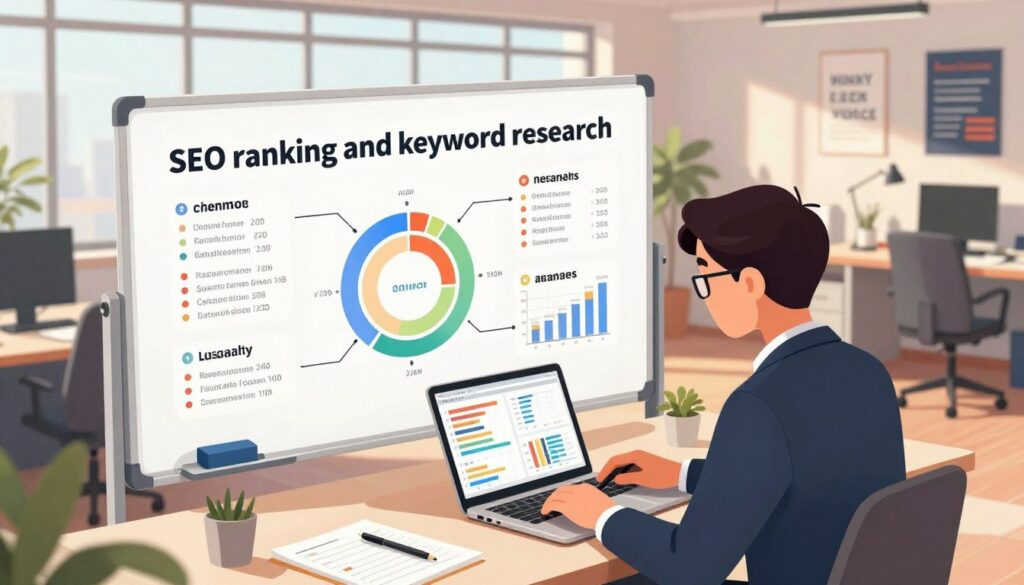
Getting a top Google ranking is key for any business in India’s digital world. You need to know how search engines see your content. This way, you can reach your target audience effectively.
Good digital strategies are crucial for your online success. By doing effective keyword research, you match your site with what your customers search for. This makes your brand more visible and relevant in a busy market.
By following these steps, you lay a strong base for lasting growth. High-quality data leads to lasting authority. Begin improving your keyword research today and see your website traffic increase.
Key Takeaways
- Understand the core mechanics of Google ranking to boost your site visibility.
- Target the Indian market by focusing on local search intent and user behavior.
- Use data-driven insights to create content that resonates with your specific audience.
- Build a sustainable foundation for long-term organic growth through consistent optimization.
- Leverage strategic planning to outperform competitors in your niche.
Understanding the Fundamentals of Google Ranking
Your journey to a google top ranking starts with knowing how search engines see your online presence. Google and others use smart programs to explore the internet. By grasping these basics, you can make your site more appealing to today’s algorithms.
How Search Engines Crawl and Index Your Content
The journey begins with crawling, where bots find new and updated pages. After discovering a page, the engine checks its content to see if it’s relevant. This info is then saved in a huge database called the index.
To make sure your site is processed right, follow these key steps:
- Discovery: Bots find your content by following links from other pages.
- Rendering: The engine looks at your HTML, CSS, and JavaScript to see what users see.
- Indexing: Your content is sorted and saved for later use.
The Role of User Intent in Search Results
Being technically sound is just the start for a google top ranking. Today, search engines focus on user intent, or what someone wants to find. If your content doesn’t meet their needs, even a well-made site won’t rank high.
Organize your content to match different user intents to better serve your audience:
| Intent Type | User Goal | Content Strategy |
| Informational | Seeking answers | Educational blog posts |
| Navigational | Finding a site | Brand-focused pages |
| Transactional | Making a purchase | Product and service pages |
By matching your content to what visitors need, you show you’re an authority. This is key to keeping a high google top ranking over time.
Mastering Keyword Research for Better Visibility

To find your target costumer in India, you need to know what they search for. Keyword research is key to a good digital marketing plan. It helps your content match what users are looking for, making it easier for them to find you.
Identifying High-Volume and Low-Competition Keywords
Finding keywords with the right balance is crucial. High-volume terms get a lot of traffic but are often crowded. Focus on long-tail keywords for a better chance of standing out.
When doing seokeyword research, aim for phrases that meet your local audience’s needs. These terms are more likely to lead to sales or learning. This way, you can build your authority without competing for the most popular keywords.
Using Tools to Find Your Target Customer Search Terms
Professional tools are vital for understanding your market’s language. Google Keyword Planner, Ahrefs, and SEMrush offer insights into what your target costumer searches for. They help you tailor your strategy to the Indian market.
These tools also let you analyze competitors and find gaps in their content. By targeting terms they miss, you can attract traffic they’re not getting. Regular keyword research keeps your site a top choice for your niche.
Mapping Keywords to Your Content Strategy
After finding valuable terms, organize them into a content plan. Link your seokeyword research to specific pages to make your content purposeful. This helps search engines see your site’s relevance, boosting your visibility.
Use this table to categorize your keywords by intent and difficulty:
| Keyword Type | Search Volume | Competition Level | Primary Goal |
| Informational | High | Medium | Building Awareness |
| Commercial | Medium | High | Driving Interest |
| Transactional | Low | Low | Increasing Sales |
By matching your content to your target costumer‘s needs, you create a great user experience. This approach makes your site a trusted resource that ranks well in search results.
Executing Effective On-Page SEO Strategies

Good on-page strategies connect what users look for with what you offer. They help search engines get your site’s context and value. This is based on your seokeyword research to meet user needs.
Optimizing Title Tags and Meta Descriptions
Your title tag is the first thing people see in search results. It should be short, clear, and include your main keyword. A good title makes users want to click on your link.
Meta descriptions give a quick summary of your page. They don’t affect rankings but boost click-through rates. Make sure to use your seokeyword research to show why your page answers their question.
Structuring Content with Header Tags
Header tags like H1, H2, and H3 organize your content. They help search engines find your main topics and subtopics. Using them makes your content easier to scan for everyone.
Use your main H1 tag for the page title. Then, use H2 and H3 tags for subtopics. This keeps your content organized and easy to follow.
Improving Readability and Keyword Placement
Readability keeps visitors on your site longer. Use short sentences and simple words for clarity. Good user experience makes your site more enjoyable.
Placing keywords wisely is also key. Don’t force keywords into sentences. Instead, place them where they add value. This way, your content is both authoritative and easy to read.
Optimizing Technical Elements for Search Engines

Improving your site’s technical health is key to getting more organic traffic in India’s digital market. Technical SEO makes sure your site works well for both search bots and people. By focusing on these areas, you build a strong base for better content ranking and performance.
Enhancing Website Loading Speed
In India, many use mobile data, so website loading speed is very important. Slow sites lose visitors quickly. To speed up, compress images, use browser caching, and cut down on heavy scripts.
A quick site keeps users happy and helps search engines crawl better. Prioritizing speed cuts bounce rates and boosts engagement.
Ensuring Mobile-Friendliness for Indian Users
Most internet traffic in India comes from mobiles, so mobile-friendliness is essential. Your site must have a responsive design that fits all screen sizes. Make sure buttons are easy to tap and text is readable without zooming.
Google now focuses on mobile-first indexing, using the mobile version for rankings. Testing your site on different mobile browsers helps avoid losing customers due to layout or navigation problems.
Managing XML Sitemaps and Robots.txt
To help search engines navigate your site, manage your XML sitemaps and robots.txt files. An XML sitemap is like a roadmap for search engines, showing them which pages are key. The robots.txt file tells crawlers which parts of your site to skip.
Setting up these files right stops search engines from wasting time on unimportant pages. This lets them focus on your most valuable content.
| Technical Element | Primary Benefit | Impact Level |
| Loading Speed | Reduces bounce rate | High |
| Mobile Design | Improves user retention | High |
| XML Sitemap | Better index coverage | Medium |
| Robots.txt | Controls crawl budget | Medium |
Implementing Off-Page SEO to Build Authority
While on-page efforts make your site better, off-page SEO shows the web’s approval. It boosts your site’s reputation and authority online. Getting mentions from trusted sources proves your content’s value and trustworthiness.
Developing a Sustainable Link Building Strategy
A good link building strategy focuses on quality over quantity. Aim for backlinks from high-authority sites that match your niche in India. This approach is favored by search engines over time.
“The best links are the ones that you don’t have to ask for, because your content is so good that people naturally want to share it.”
Here are some tactics for a healthy strategy:
- Create high-quality, shareable content that solves specific user problems.
- Conduct original research or surveys to become a primary source of data.
- Reach out to industry influencers who can provide genuine mentions.
Utilizing Social Media for Brand Signals
Social media boosts your brand authority and visibility. While shares don’t directly affect rankings, they drive traffic and help your content get found. Regular engagement builds a loyal community that supports your brand.
| Strategy | Primary Benefit | Focus Area |
| Social Engagement | Brand Awareness | Community Interaction |
| Link Building | Domain Authority | Backlink Acquisition |
| Guest Posting | Referral Traffic | Industry Networking |
Engaging in Guest Posting and Community Outreach
Guest posting is key to off-page SEO when done right. It makes you an expert by sharing valuable insights on other sites. This boosts your reputation and builds relationships with industry leaders.
Outreach means joining forums, webinars, and local groups. Helping others online increases your brand’s presence. This sustainable approach helps your growth stay natural and strong against changes.
Leveraging Backlinks Benefits for Higher Rankings

Building a strong backlink profile is key to getting a google top ranking today. When good websites link to yours, it’s like they’re saying you’re trustworthy. This tells search engines your site is valuable and reliable.
Why Quality Backlinks Outperform Quantity
Many beginners focus on getting lots of low-quality links. But, search engines value the quality and authority of the link source more than the number. A link from a respected industry site is much more valuable than many from bad sites.
Going for quality means your site gets real authority. High-quality links help you build a strong base for a google top ranking that stands up to updates.
- Relevance: Links from your niche are more important.
- Trust: Links from established sites boost your credibility.
- Longevity: Good links are less likely to be seen as spam.
Identifying High-Authority Domains for Outreach
To get noticed, target influential sites in your field. Look at your competitors’ best links. Use tools like Ahrefs, SEMrush, or Moz to check the Domain Authority (DA) or Domain Rating (DR) of potential partners.
Choose sites with high editorial standards and active audiences. Personalize your outreach and offer content that helps their readers. This makes them more likely to link back to you.
Monitoring Your Backlink Profile for Toxic Links
Not all links help your SEO. Sometimes, your site gets bad links from low-quality or harmful sites. It’s important to check your backlink profile regularly to keep your search rankings up.
If you find bad links, act fast to protect your site. Use the Google Search Console Disavow Tool to tell search engines to ignore these links. Keeping your backlink profile clean helps you stay on track for a google top ranking.
Identifying and Reaching Your Target Customer
To connect with your audience in India, you need more than basic info. You must understand their specific needs, behaviors, and cultural nuances. This is key to building a strong relationship with your target costumer.
Creating Buyer Personas for the Indian Market
The Indian market is very diverse. It includes different languages, regions, and socio-economic backgrounds. You should create detailed buyer personas that reflect these unique realities.
Think about regional preferences, mobile-first browsing habits, and local purchasing power. By making your target costumer relatable, you can tailor your messaging. This makes your brand feel relevant and accessible.
Aligning Content Topics with Customer Pain Points
After understanding your audience, you must address their specific challenges through your content. Effective keyword research helps you find the exact questions and problems your audience is searching for online.
When your content offers clear, actionable solutions, you build trust and authority. This ensures your content serves a clear purpose in the customer journey.
Tracking Conversions from Organic Search Traffic
Measuring your success is crucial for growth. You need to track how many visitors from organic search take the desired action on your website. This could be signing up for a newsletter or making a purchase.
By analyzing this data, you can improve your keyword research and content strategy. Consistent monitoring helps you see which topics are most valuable. This way, you can focus on strategies that convert your audience into loyal customers.
Analyzing Performance and Adjusting Your Strategy
Getting a google top ranking is an ongoing process. Search engines and user habits in India keep changing. Your site needs to keep up to stay relevant. You must track your progress and make smart changes.
Setting Up Google Search Console and Analytics
To understand your site’s traffic, connect it to Google Search Console and Google Analytics. These tools give you the data to see how users find your site. Verifying your domain lets you see search queries and technical health.
Google Search Console shows which keywords bring clicks. Google Analytics tracks user behavior after they click. Integrating these platforms is key to a good optimization plan.
Interpreting Key Performance Indicators
With your tools set up, focus on important metrics for your business. Ignore vanity metrics and focus on user engagement and success. Key Performance Indicators (KPIs) like organic click-through rates and bounce rates show your site’s health.
Also, track your average position for important search terms. If traffic drops, check if your content still meets user needs. Regular checks help keep your google top ranking over time.
Iterating Based on Data-Driven Insights
Use data to improve your online presence. Update underperforming pages with new content or better keywords. Small, consistent changes can greatly improve your visibility.
Use your insights to refine your content strategy and fix technical issues. Stay agile and responsive to data to keep your google top ranking. SEO is a cycle of testing, learning, and growing.
Avoiding Common SEO Pitfalls in the Indian Market
India’s digital world is full of traps that could slow you down. It’s tempting to get quick wins, but long-term success means playing fair. Spotting these common mistakes early keeps your site safe from penalties and keeps search engines happy.
Steering Clear of Black Hat SEO Tactics
Black hat tactics are sneaky ways to cheat search engines. Tricks like cloaking, hidden text, and buying bad backlinks might seem helpful at first. But, they’re severe risks. If Google finds out, your site could face serious consequences.
Stick to honest, white hat methods for lasting success. Instead of trying to fool the system, focus on giving real value to your audience. This way, your growth stays steady, even as search engines change.
Preventing Keyword Stuffing and Thin Content
Keyword stuffing is when you cram too many keywords into your pages. It’s a bad move that search engines can spot. Do thorough seokeyword research to find terms that naturally fit your content and answer user questions.
Thin content is another big mistake. It happens when pages lack depth or value. Your pages need to offer unique insights to rank well. Always aim to give your target costumer what they need.
Adapting to Frequent Google Algorithm Updates
Google updates its algorithms often to favor quality content. Being flexible is key to staying visible in India’s competitive market. Instead of panicking over updates, focus on creating a site that always serves your target costumer well.
Regular site audits help you keep up with changes. Use your seokeyword research to improve your strategy and keep your content relevant. Quality and consistency beat quick fixes any day.
| Strategy Type | Action | Result |
| White Hat | Quality Content | Sustainable Growth |
| Black Hat | Keyword Stuffing | Search Penalties |
| White Hat | User-Centric Design | Higher Conversions |
| Black Hat | Hidden Links | Reputation Damage |
Conclusion
Mastering search engine optimization takes hard work and planning. You now know how to make your website more visible in India.
Success comes from combining technical skills with great content. Focus on what users want and keep an eye on how well your site does. This way, your online presence will stay strong, even when things change.
Google likes websites that offer real value to their visitors. Work on making your site easy to use and fun to visit. This will keep people coming back.
Your path to better rankings is always evolving. Use Google Search Console to improve and stay ahead of others.
Begin using these strategies now to see your website traffic grow. Your hard work will help your brand stand out online.
FAQ
How can you improve your google ranking within the competitive Indian digital landscape?
To boost your google ranking, focus on seokeyword research, quality content, and technical tweaks. Make sure your site meets Indian market needs and is indexed well by search engines. This builds a strong base for organic growth.
What role does seokeyword research play in reaching your target costumer?
Seokeyword research helps find the terms your target costumer uses online. It’s key to match high-volume, low-competition keywords with your content. This way, your brand shows up when your audience searches.
Why is it essential to balance off page and on page seo?
Off page and on page seo balance makes your site seem relevant and trustworthy. On-page tweaks like title tags boost internal relevance. Off-page efforts, like quality links, increase your google top ranking by showing external credibility.
What are the primary backlinks benifits for your site’s authority?
Backlinks boost your site’s authority and referral traffic. Getting links from The Economic Times or TechCrunch makes search engines trust your site. This greatly increases your chance of ranking high on google.
How do you optimize your site for a google top ranking on mobile devices?
For a google top ranking in India, focus on mobile-first optimization. Fast loading and responsive design are crucial. Use Google PageSpeed Insights to fix mobile issues.
How can you avoid common SEO pitfalls that might hurt your google ranking?
Avoid black hat SEO tactics like keyword stuffing. Instead, offer real value to your target costumer. Stay updated with Google Search Central to keep your site compliant and visible.
Why is understanding user intent crucial for your seo keyword research?
Understanding user intent helps you go beyond simple keyword matching. It lets you tailor content to meet specific needs. This is key for maintaining a high google ranking over time.


Hi, this is a comment.
To get started with moderating, editing, and deleting comments, please visit the Comments screen in the dashboard.
Commenter avatars come from Gravatar.